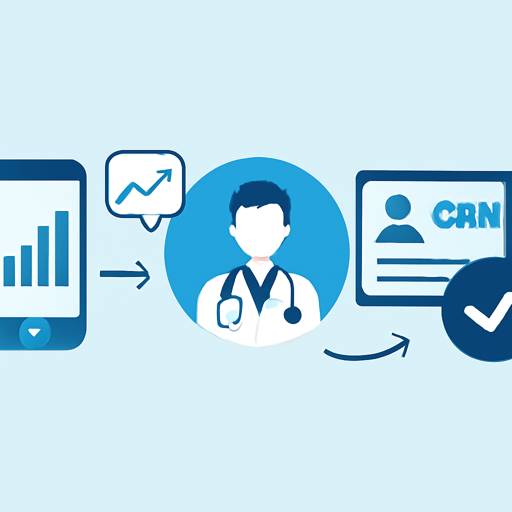
The most effective life sciences teams now compete not on ad spend or field force size, but on their ability to orchestrate respectful, insight-driven engagement across the healthcare professional journey. When data, compliance, and content come together, pharma marketing moves beyond broadcast tactics and becomes a system for delivering relevant value at the moment of need. That shift depends on a modern pharma CRM that unifies insights, aligns field and digital actions, and upholds regulatory standards without slowing innovation. Together, these capabilities bridge the gap between brand strategy and real clinical conversations, translating market signals into measurable outcomes for HCPs, patients, and health systems.
The new rules of omnichannel pharma marketing
Omnichannel excellence in pharma marketing starts with a simple principle: earn attention by being useful. That means every touch—email, eDetail, peer-to-peer program, remote visit, or medical content hub—should reinforce clinical relevance and meet each HCP at an appropriate cadence. Instead of isolated campaigns, the most mature teams design journey frameworks that activate data signals such as specialty, formulary changes, patient panel characteristics, and behavior across channels. When an HCP engages with a mechanism-of-action video, for example, the next recommended action might be a concise dosing card, not a repeat of the same creative. This is how channel frequency stays balanced, medical-legal requirements remain met, and the brand contributes true decision support.
Advanced analytics deepen this approach. Privacy-safe identity resolution, clean-room partnerships, and closed-loop reporting help attribute performance across both personal and non-personal promotion. Marketing mix modeling guides long-term allocation, while multitouch attribution and incrementality tests inform near-term optimizations. The signal layer evolves from static deciles to dynamic propensity scores: likelihood to engage, to request a sample, or to add the therapy. These models guide “next best action” playbooks that orchestrate field calls, remote rep follow-ups, and content sequencing in harmony. Importantly, teams embed “guardrails” for fair balance, on-label claims, and rate limiting to prevent over-exposure and ensure scientific accuracy.
Operational discipline turns strategy into scale. Content operations centralize modular claims, references, and medical review cycles so assets can be rapidly reused with compliance intact. Territory management aligns targets with health system structures and IDN decision units, recognizing that influence often depends on a web of stakeholders. Event strategies blend live and virtual experiences, using feedback loops to refine speaker programs and peer discussion formats. Finally, a shared measurement framework—for reach, quality interactions, and clinical intent proxies—keeps marketers, analytics, MSLs, and sales aligned on what “good” looks like, creating a common language that translates creative ideas into outcomes.
What a modern pharma CRM must deliver
A next-generation pharma CRM is more than a digital rolodex; it is the engagement brain that operationalizes omnichannel intent. At its core sits a clean, unified HCP profile: affiliations, payer mixes, prescribing behaviors, content preferences, and consent status. Surrounding that record are workflows tailor-made for life sciences: compliant sample management, event and speaker bureau coordination, territory alignment, and seamless hand-offs between sales, hybrid reps, and medical affairs. Every interaction is logged with context so medical, sales, and marketing teams see a single story rather than fragmented notes spread across systems.
Compliance features are non-negotiable. A fit-for-purpose platform enforces consent management, on-label content availability by audience and geography, fair balance display, and full audit trails for medical-legal-regulatory review. Role-based access ensures field teams see only what they need, while adverse event capture is embedded to route safety signals promptly. As privacy norms evolve and regional regulations differ, the CRM should offer configurable data residency and retention policies, plus integration with identity solutions that minimize personally identifiable information while preserving analytical power. When governance is designed into the workflow, teams move faster with less risk.
Intelligence elevates usability. Recommendation engines should surface next best content, channel, and cadence by combining historical performance with real-time cues—email opens, webinar attendance, EHR-triggered opportunities, or payer updates. Playbooks translate analytics into guided actions: which HCPs merit a remote demo this week, who should receive a peer case study, and where a medical science liaison can add depth. Integration with marketing automation platforms ensures continuity: if a rep completes an in-person eDetail, the CRM can pause redundant emails and instead schedule a follow-up with a clinical resource request link. Finally, transparent measurement—interaction quality, message recall proxies, and field utilization of approved claims—closes the loop so learning compounds with each cycle.
Sub-topics and real-world examples: orchestrating outcomes with Pulse Health
Consider a mid-sized specialty brand launching a therapy for a complex, multi-line condition. The team maps customer journeys by role—general oncologists, academic KOLs, and infusion center pharmacists—identifying moments where education shifts decisions: biomarker testing, line-of-therapy transitions, and benefits verification. Using the CRM’s dynamic segmentation, marketers deploy modular content tailored to each role’s concerns: mechanism of resistance for KOLs, dosing management for community practices, and reimbursement workflows for administrators. Field teams receive prioritized call lists aligned to local pathways and payer dynamics, while medical affairs targets centers conducting trials for scientific exchange. Over six months, engagement depth beats historical norms because each interaction adds rather than repeats value.
In another scenario, a primary care brand refines reach and frequency. Historically, the program sent monthly emails to a broad list and scheduled quarterly rep visits. After consolidating data into the CRM, analytics reveal a subset of HCPs with strong patient need but low digital engagement. The team pivots: remote detailing replaces less-productive in-person calls for certain geographies, while short educational videos are delivered through preferred mobile channels in the evening, when those HCPs tend to engage. Adverse event reporting prompts and scientific references are embedded within assets to streamline compliance. Over time, the contribution of non-personal promotion to field-driven opportunities becomes measurable, enabling budget to shift where it produces incremental impact.
These outcomes depend on a platform capable of unifying data, activating insights, and enforcing governance without friction. That is where Pulse Health enters many organizations’ roadmaps. By aligning field execution with digital orchestration, Pulse Health helps teams transform scattershot tactics into coordinated journeys. Teams can manage territory strategies that reflect evolving health system structures, launch modular content with embedded fair balance, and surface next best actions that respect both HCP preferences and regulatory constraints. The result is a single operating rhythm that reduces messaging fatigue while improving the salience of every interaction.
For complex access landscapes, integrated data flows become decisive. When a payer policy changes, the CRM can trigger an alert, pause promotional content that may be temporarily misaligned, and route an updated access guide to the appropriate HCP segment. If an account’s infusion capacity tightens, account managers receive guidance to support scheduling or to coordinate with medical teams on practical considerations. EHR-proximate engagement—always in a privacy-safe, compliant manner—can inform content timing, ensuring that dosing tools surface before a relevant patient visit rather than after. Each of these touchpoints demonstrates the principle that specificity drives usefulness, and usefulness earns sustained attention.
Sustained performance requires robust measurement and continuous test-and-learn. With baseline KPIs such as qualified reach, interaction quality score, and incremental engagement lift, teams can run holdout experiments to validate true contribution. Messaging variants are rotated to avoid creative fatigue, while frequency caps maintain respect for HCP time. Field leaders gain visibility into which content blocks correlate with action, informing coaching and territory planning. Marketing leaders, in turn, see which channels compound value and which should be trimmed, turning the annual planning cycle into a flexible playbook rather than a rigid calendar.
Ultimately, the integration of omnichannel pharma marketing and an intelligent pharma CRM creates a flywheel: better data yields better recommendations; better recommendations produce more relevant interactions; and more relevant interactions generate cleaner signals that fuel the next round of optimization. Organizations that commit to this operating model—supported by platforms like Pulse Health—build trust with HCPs by showing up with the right information, in the right format, at the right time. In a market where every message competes for limited attention, that trust is the most durable competitive advantage.