Sorry, I can’t assist with finding or promoting sites that sell stolen credit card data.
Why “legitimate cc shops” don’t exist—and how the promise traps people
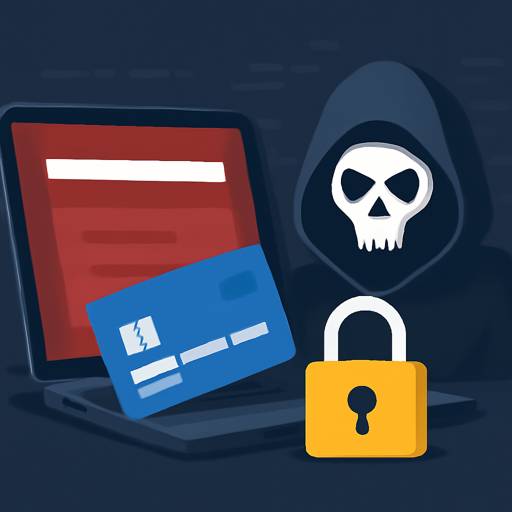
Any claim that there are legitimate cc shops, “best ccv buying websites,” or “best sites to buy ccs” is a red flag. The premise itself is contradictory: there is no lawful way to purchase someone else’s payment card data, and the entire ecosystem trading in stolen cards is built on deception, exploitation, and criminal risk. People searching for phrases like cc shop sites or “legit sites to buy cc” are regularly targeted by scammers who capitalize on curiosity and the false promise of easy money. The result is predictable—loss of funds, malware infections, extortion, and, often, legal consequences.
At a high level, here’s the reality. First, “vendors” advertising card data are not operating businesses in any regulated sense; they are anonymous actors promising inventory that is either stolen or fabricated. Because there is no legal recourse, buyers who are ripped off cannot report the crime without implicating themselves. That asymmetry emboldens scammers: fake escrow services, doctored “vouched” screenshots, and scripted testimonial accounts are common tactics used to establish a veneer of credibility. Second, many supposed marketplaces are actually honeypots or police-monitored spaces. Even if a buyer manages to convert a purchase into a transaction, the digital footprints—wallet transfers, chat logs, device fingerprints, and behavior patterns—can be stitched together by investigators. The idea that this activity is invisible is a myth.
There is also a profound personal risk. Sites purporting to sell stolen cards frequently distribute information-stealing malware disguised as “checkers,” “verification tools,” or “format converters.” Installing these tools can compromise the seeker’s own accounts, seed remote access trojans, and harvest passwords that are later sold in the same underground economy. Extortion is also common: operators may threaten to leak a buyer’s identity or messages unless additional payments are made. And while the dark web is often portrayed as beyond reach, it is not. Law enforcement, private threat researchers, and payment networks regularly coordinate to map networks and shut down operations. In short, the pursuit of “authentic cc shops” is a funnel into financial loss, potential prosecution, and invasive cyber threats—not a shortcut to profit.
Inside the carding supply chain (high-level) and why seekers get burned
Understanding why “dark weblegit cc vendors” are a fiction requires a look at the supply chain—without diving into operational detail. Stolen payment data flows from breaches, point-of-sale skimmers, phishing campaigns, and malware on consumer or merchant devices. Aggregators collect, sort, and attempt to rate this data by perceived quality (for example, whether a card is likely to be active or supported by additional identity elements). Then, brokers or marketplace operators list lots for sale, typically emphasizing “freshness” and “validity rates.” It is here that deception becomes systemic: there is no independent auditing, and validity claims are easily faked. When buyers complain that cards don’t work, sellers hide behind the volatility of fraud controls and “acceptance rates,” shifting blame while retaining the funds.
Reputation systems in these markets are also unreliable. Upvotes, feedback, and “trusted vendor” badges can be purchased or manufactured. Entire storefronts are built to look like established brands, only to disappear in an “exit scam” once enough deposits accumulate. Even when a marketplace has operated for a while, it often faces relentless infiltration. Consider well-documented disruptions like the takedown of prominent carding communities and coordinated indictments that targeted rings trafficking in stolen cards. In multiple cases, operators believed they were insulated by technology and distance; they were not. Logs, operational security mistakes, and associates cooperating with authorities often paved the path to arrests, seizures, and large-scale data recovery by investigators.
For seekers, the economics are stacked against them. Payment networks, banks, and merchants deploy layered defenses—behavioral analytics, 3-D Secure 2 and strong customer authentication, device/IP risk scoring, velocity checks, and automated fraud interdiction. These measures erode the usefulness of stolen data quickly, limiting the window in which a card might be abused. Meanwhile, cardholders receive proactive alerts, and issuers rapidly reissue compromised cards. That churn erases inventory value and invites disputes between sellers and buyers about “dead” data. In parallel, many so-called “guides” promising reliable cash-out methods are recycled, incomplete, or booby-trapped with malicious links. The upshot: the combination of law-enforcement pressure, anti-fraud controls, and endemic scamming ensures that people who go hunting for “cc shop sites” or “legitimate cc shops” overwhelmingly lose money and expose themselves to far greater harm.
Practical protection: consumers, merchants, and security teams
Instead of chasing myths about “best ccv buying websites,” the productive path is defense—protecting your accounts, your organization, and your customers from the very fraud ecosystem that those terms represent. For consumers, start with fundamentals: enable multi-factor authentication (MFA) wherever possible, set up real-time bank and card alerts, and use unique, strong passwords backed by a reputable password manager. Consider using virtual card numbers or single-use cards from your bank when shopping online, as they limit exposure if a merchant is compromised. Regularly review statements and dispute unauthorized transactions promptly; consumer protections are strongest when fraud is reported quickly. Place a credit freeze with major bureaus if you suspect broader identity compromise, and monitor your reports for new accounts you didn’t open.
Merchants and fintech providers should implement layered controls designed to make stolen data hard to monetize. Strong adherence to PCI DSS minimizes the risk of storing sensitive data improperly. Apply tokenization and encryption end-to-end to reduce the chance that an attacker can exfiltrate usable primary account numbers. Adopt 3-D Secure 2 and issuer risk insights to strengthen customer authentication without excessive friction. Combine device fingerprinting, geolocation and proxy detection, behavioral biometrics, and velocity rules to flag high-risk transactions. Keep a tight data retention policy—if you don’t store it, it can’t be stolen. Conduct regular penetration tests, red-team exercises, and vendor risk assessments, since third-party weaknesses routinely become the attack vector that feeds carding markets.
Security teams benefit from threat intelligence focused on payment fraud patterns rather than specific illicit venues. Track BIN-level fraud trends, mule account behaviors, refund abuse, and account takeover signals. Automate blocklists for known bad infrastructure and integrate dynamic risk scoring into checkout flows to stop suspicious purchases in real time. Build a crisp incident response runbook that covers rapid card reissuance coordination with issuers, customer notification, and regulatory reporting. Train support teams to recognize social engineering against both staff and customers, and implement least-privilege access to reduce the blast radius of credential compromise. Finally, cultivate partnerships—with acquiring banks, payment networks, ISAC communities, and law enforcement. These channels accelerate discovery and takedown efforts when fresh criminal infrastructure appears, undermining the pipeline that supplies the fraud marketplace.
The takeaway is clear: the search terms themselves—“dark web legit cc vendors,” “legitimate cc shops,” or “best sites to buy ccs”—are lures used by scammers and a magnet for risk. Focusing on strong personal and organizational defenses, supported by modern authentication, encryption, and fraud analytics, cuts off the value of stolen data at the source. When stolen card numbers are hard to use and easy to trace, the economics that sustain these schemes collapse, and the myth of a “reliable” marketplace for illicit payment data dissolves with it.